




Explosion protection in valves
ATEX Valves for Zone 1/21 – Ball Valves, Pressure Regulators and Safety Valves
In potentially explosive atmospheres, what matters is not just a valve's function but its approval status. Anyone shutting off flow, reducing pressure, or protecting a vessel against overpressure in Zone 1 or Zone 21 must assign the component to a zone, be able to read its marking, and justify the selection in the explosion protection document in a traceable way. STASTO Automation supplies valves with ATEX marking for this purpose: flanged ball valves of the BA055 and BA056 series – manual or automated –, pressure regulators of the PR03 series, and safety valves of the SV25 series. Which zones, temperature classes, and pressure ranges a specific version covers depends on the variant; we will provide the relevant details for your inquiry based on the datasheet and manufacturer documentation.
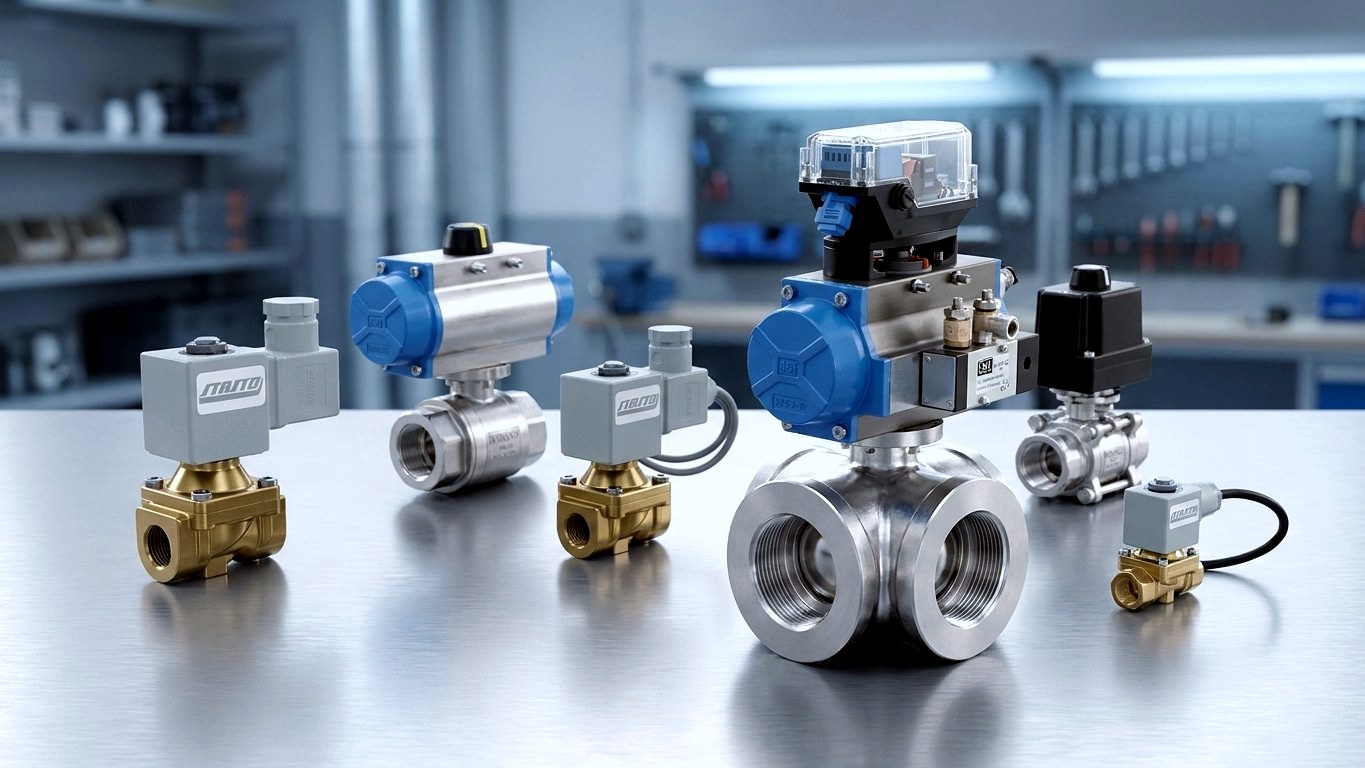
Shut off, regulate, and protect in Zone 1/21
Why STASTO
Ex-rated valves that match the zone – not just the catalog page
With ATEX valves, what counts is the combination of function, marking, and documentation. We start from your plant's zone classification – and we'll tell you when no standard variant fits.
Selection by zone, not by catalog page
We start with your plant's zone classification and the media involved. Gas or dust Ex environment, temperature at the installation site, and connection type determine which version of the BA055/BA056, PR03, or SV25 series is even an option. If no standard variant fits, we work with you to find an alternative.
Shut-off, control, and safety from a single source
Ball valves, pressure regulators, safety valves, solenoid coils, and flow monitoring all come from one range. That reduces interfaces in sizing, ordering, and documentation – and we can check whether the components match each other in marking and temperature class.
Documentation you can actually work with
For Ex-rated valves you need more than just an item number: marking, datasheet, and – depending on series and manufacturer – conformity or manufacturer documentation. Which documents are available for a given variant we clarify on request before you order.
Functional chain, not a single component
A correctly marked ball valve is of little use if the actuator, solenoid coil, supply line, or monitoring don't cover the zone. We look at the whole chain with you, from the media supply line to flow monitoring.
Basics
Understanding ATEX: Zones, Marking, and Valve Types
Key terms for selecting Ex-rated valves and actuators – explained briefly, so you can confidently match marking to zone.
Zones and Atmospheres
- Gas Ex (Zones 0/1/2)
- Explosive gas, vapor, or mist atmosphere; Zone 1 indicates occasional occurrence during normal operation.
- Dust Ex (Zones 20/21/22)
- Combustible dusts, such as grain, flour, or wood dust; Zone 21 is the dust equivalent of Zone 1.
- Separate Assessment
- Gas and dust zones are assessed separately. A valve or actuator must cover the zone that actually applies.
- Explosion Protection Document
- The basis for zone classification at the facility – without a defined zone, no valve or actuator can be properly assessed.
Reading the Marking
- Equipment Group and Category
- For example, II 2G for gas and II 2D for dust atmospheres in the marking of the Type Y solenoid coil.
- Type of Protection
- Describes the type of protection, such as Ex mb (encapsulation) or tb (protection by enclosure).
- Explosion Group
- IIC for gas or IIIC for conductive dust – the higher the rating, the more demanding the medium.
- Temperature class
- T4 for gas or a maximum surface temperature such as T130 °C for dust; must match the ignition temperature of the medium.
Non-electrical equipment and standards
- Directive 2014/34/EU
- Explicitly also covers non-electrical equipment for potentially explosive atmospheres.
- Mechanical valves and fittings
- Fall within scope if they have their own potential ignition source – such as friction, mechanically generated sparks, or electrostatic charging.
- EN ISO 80079-36/-37
- Basis for the ignition hazard assessment of non-electrical equipment.
- Equipment or component
- Whether a design is marked as equipment under the directive or supplied as a component without its own ignition source depends on the series and is clarified upon inquiry.
Valve functions in the Ex zone
- Shut-off
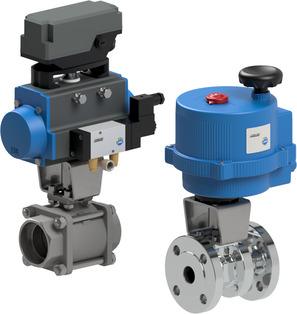
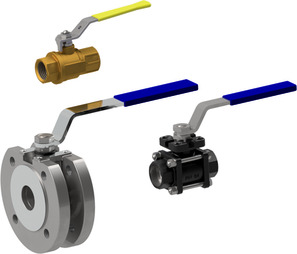
- Flanged ball valves of the BA055/BA056 series – manual for hand and maintenance shut-off, automated as part of a switching function.
- Control
- Pressure regulators of the PR03 series keep the operating pressure constant even with fluctuating inlet pressure.
- Protect
- Spring-loaded safety valves of the SV25 series protect against excessive overpressure.
- Actuation and monitoring
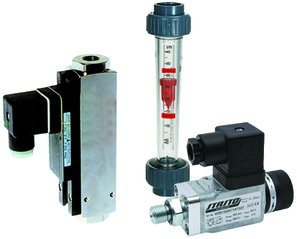
- Type Y solenoid coil for solenoid valves and flow switches in ATEX design for flow monitoring.
Product Range
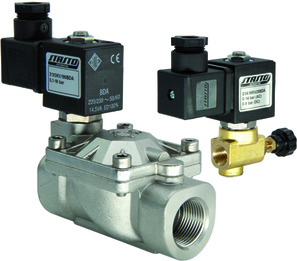
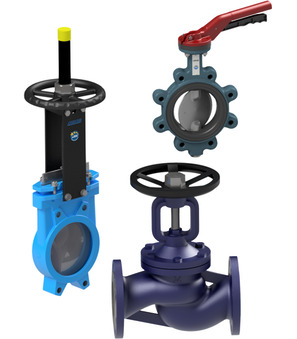
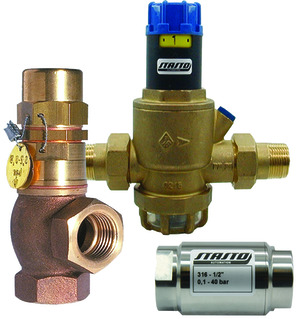
ATEX Valves in the STASTO Range
Flanged ball valves, pressure regulators, safety valves and solenoid coils with ATEX marking. Nominal sizes, materials, seals and marking vary by variant.
Applications
Where ATEX valves and fittings from our range are used
Gas Ex and dust Ex present different requirements. These industries request Ex-rated valves and fittings most frequently.
Chemical and Process Engineering
Solvent-based media, dosing and transfer stations, reactor peripherals. Gas Ex is usually the primary concern here – shut-off, pressure reduction and overpressure protection are needed within the same assembly.
Paint, Coating and Finishing Systems
Spraying and mixing areas with flammable solvent vapours. Shut-off and control valves must be suitable for the designated zone and compatible with the cleaning media used.
Grain, Feed and Milling Operations
Dust Ex caused by grain, flour or feed dust. Key factors are dust zones such as Zone 21 and the maximum surface temperature of the components.
Woodworking and Dust Extraction
Chips and wood dust in extraction and filter systems. Often combined with compressed air functions for filter cleaning – both the valve and the supply line must then match the zone.
Compressed Air Supply in Hazardous Areas
Pressure regulators and safety valves protect consumers in hazardous areas. Supply via ATEX hose of the PA-AYA series, monitored via ATEX-rated flow switches.
Painting and Coating Lines in Vehicle Manufacturing
Automated shut-off functions in paint booths and mixing rooms. Here, flanged ball valves of the BA055/BA056 series work together with an actuator and ATEX solenoid coil.
Availability
Availability, Variants and Delivery
There are no blanket figures for Ex-rated valves – the specific variant is what matters. We clarify these points for every inquiry.
Variants, Not Blanket Specs
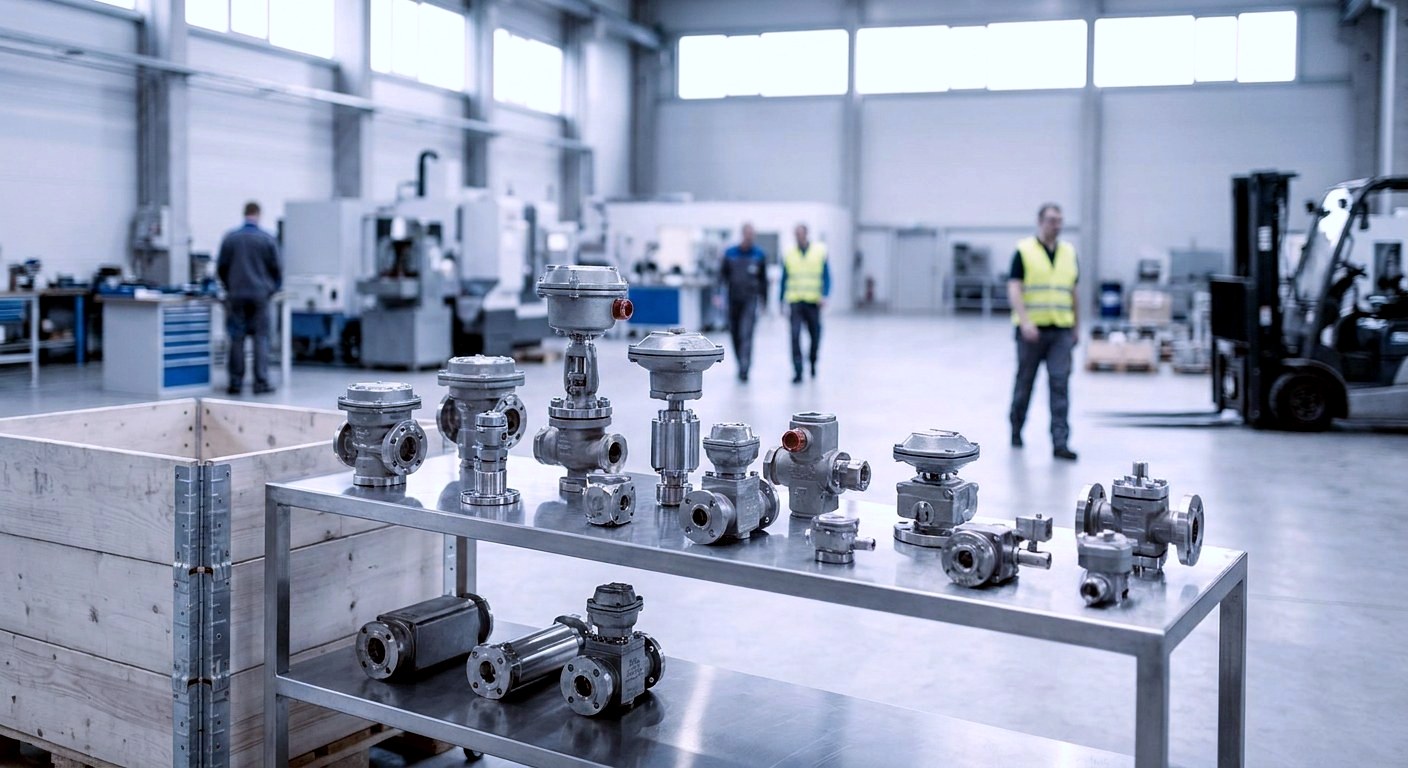
Nominal sizes, material and seal options, and the associated Ex marking vary within a series. You'll find the values applicable to your case on the product or variant page, or you can ask us directly.
Availability
Stock availability and lead time depend on series, nominal size and configuration – we'll confirm the current status for your specific inquiry.
Actuated Versions
Ball valves are available manually or actuated depending on the series; preconfigured STASTO combinations match valve, actuator and accessories to one another.
Replacement and Reordering
For existing installations, we check your current marking or part number to determine which current version is the right match.
Procedure
How to Select an ATEX Valve
From zone classification through marking to documented selection – three steps to the right Ex-rated valve.
Define Zone, Medium and Operating Data
The starting point is the zone classification from the explosion protection document; gas explosion (Gas-Ex) and dust explosion (Dust-Ex) atmospheres are considered separately. Add to this the medium, operating and test pressure, temperature at the installation site, connection type and nominal size – these determine the material and seal selection.
Compare Marking Against Zone Requirements
The marking specifies equipment group and category, gas or dust atmosphere, type of protection, explosion group and temperature class or maximum surface temperature. This marking must cover the actual zone in question, not merely state "ATEX". Directive 2014/34/EU explicitly covers non-electrical equipment as well; assessment is carried out via an ignition hazard assessment per EN ISO 80079-36/-37.
Verify Functional Chain and Document Selection
Shut-off, control, safety and monitoring functions interact – actuator, coil, cable and monitoring must also cover the zone. Then record the item designation, marking and zone basis; we will tell you in advance which documentation we can provide for the selected variant.
Frequently Asked Questions
ATEX valves: frequently asked questions
Answers on zones, marking, series and documentation – short and to the point.
Which valves does STASTO offer for Zone 1 and Zone 21?
Our range includes flanged ball valves in the BA055 and BA056 series in ATEX design — manual as BA055-L-ATEX and BA056-L-ATEX, actuated as BA055, BA056-ATEX — pressure regulators in the PR03-ATEX and PR03-3C-ATEX series, and safety valves in the SV25-3C-ATEX and SV25-3G-ATEX series. Also available are the type Y solenoid coil in ATEX design, control valves in the SG10 series in ATEX design, and pre-assembled STASTO combinations. Which zones a specific variant covers depends on the design and is clarified upon request.
What is Directive 2014/34/EU?
2014/34/EU is the European ATEX product directive for equipment and protective systems intended for use in potentially explosive atmospheres. It explicitly covers non-electrical equipment as well: a purely mechanical valve falls within its scope if it has its own potential ignition source — for example through friction, mechanically generated sparks or electrostatic charge. The assessment is carried out via an ignition hazard assessment according to EN ISO 80079-36/-37.
What does the marking II 2G Ex mb IIC T4 / II 2D Ex mb tb IIIC T130 °C mean?
This marking — used on the type Y solenoid coil — describes a Group II device for gas (2G) and dust atmospheres (2D) with the type of protection Ex mb and tb respectively, explosion groups IIC and IIIC, temperature class T4, and a maximum surface temperature of 130 °C. What matters is that these ratings cover the zone present at your site and the ignition temperature of the medium.
What is the difference between Zone 1 and Zone 21?
Zone 1 designates an area where an explosive gas, vapor or mist atmosphere is likely to occur occasionally during normal operation; Zone 21 is the equivalent for combustible dust. Gas and dust zones are assessed separately — for dust, maximum surface temperature and dust layer buildup are additionally relevant.
Is the word "ATEX" in the product name sufficient as proof?
No. What matters is the complete Ex marking of the specific variant, which must be checked against the zone on site. Which marking, datasheets and conformity or manufacturer documentation are available for a given design is clarified before ordering.
Manual or automated – which ball valve design fits?
Manual versions (BA055-L-ATEX, BA056-L-ATEX) are suitable for manual shut-off upstream of units, sampling and maintenance isolation. Actuated versions (BA055, BA056-ATEX) are the right choice when the valve, together with its actuator and signal, forms part of a switching or safety function. In pre-assembled STASTO combinations, ATEX suitability refers to the complete ordered combination of valve, actuator and accessories.
Which components do I need in addition to the valve?
Always check the entire functional chain: actuator and solenoid coil for control, media supply line – such as the ATEX hose of the PA-AYA series – and flow switch in ATEX design for flow monitoring. All components must cover the relevant zone and be compatible with each other in temperature class.
Which pressure and temperature ranges does an ATEX valve cover?
This depends on the variant and is not stated as a blanket figure. Nominal size, material, seal, response pressure and the associated marking differ within a series – we will provide the values applicable to your case upon specific inquiry from the datasheet and manufacturer documentation.
Next step
Have your ATEX valve sized for the zone
Tell us the zone, medium and operating data — we'll check which version of the BA055/BA056, PR03 or SV25 series fits, and let you know which documentation we can provide.